
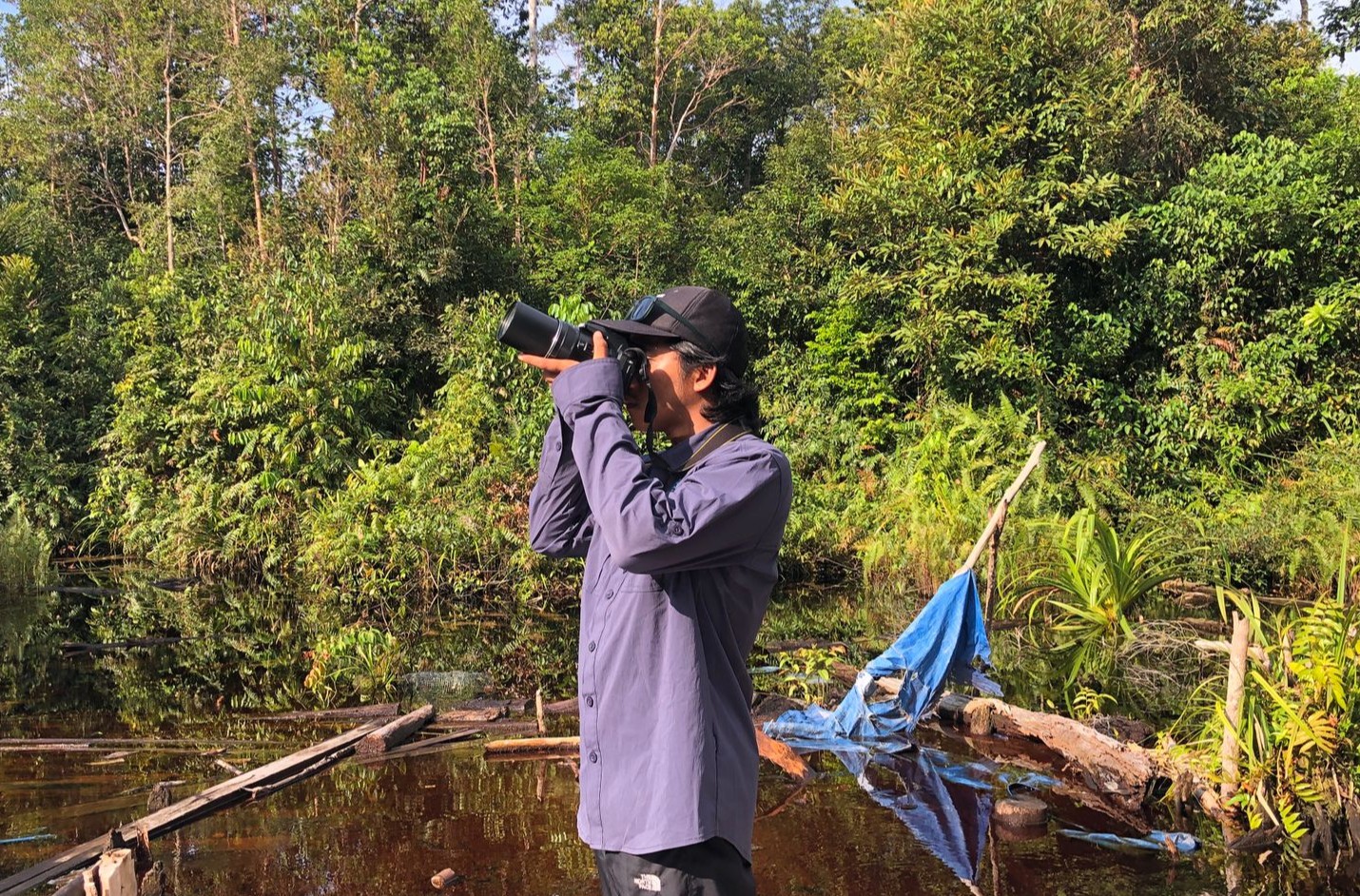
Biodiversity Assesment in Jamjam
Tanggal : 29 April 2026
The Biodiversity Assessment in the Jamjam region is designed to provide a comprehensive understanding of biodiversity conditions within a landscape that has undergone significant land-use transformation. This assessment seeks to evaluate the extent to which remaining ecosystems continue to support ecological functions, while also identifying opportunities for conservation and ecosystem recovery.
Jamjam represents a heterogeneous landscape where remnant natural forests are interspersed with secondary forests, agroforestry systems, cultivated land, and open areas. This mosaic of land cover creates varying habitat conditions, influencing species composition, ecological interactions, and the persistence of key species across the landscape.
The study adopts an integrated approach that combines field-based data collection with spatial analysis. Vegetation surveys are conducted to assess forest structure, species composition, and regeneration dynamics, which together reflect ecosystem resilience. In parallel, fauna observations focus on key indicator groups—such as mammals, birds, and herpetofauna—that are particularly sensitive to changes in habitat quality.
Data collection methods include vegetation plot sampling for flora inventories, alongside line transects, camera trapping, and point count techniques for fauna surveys. Beyond documenting species presence, the study also examines patterns of abundance and distribution to better interpret habitat conditions and levels of environmental pressure. These insights are essential for understanding ecological connectivity and the degree of landscape fragmentation.
Subsequent analyses are directed toward identifying ecologically significant areas, including habitats that support priority species or play critical roles in maintaining ecosystem balance. By integrating biodiversity data with land cover information, the study aims to delineate priority zones for conservation, protection, and potential restoration interventions.
The assessment also considers anthropogenic pressures, such as agricultural expansion, logging activities, and other disturbances that may degrade habitat quality. Evaluating these factors is crucial for developing management strategies that are not only responsive but also adaptive to ongoing landscape dynamics.
Overall, this biodiversity assessment is expected to provide a robust scientific foundation for informed decision-making in the Jamjam landscape. The findings will support conservation planning while also contributing to the development of sustainable land-use strategies that balance ecological integrity with responsible resource use.